

Introduction
Leather looks tough, which is exactly why people treat it badly. They grab an all-purpose spray, scrub at a stain, and wonder why the finish turned patchy a week later. Knowing how to clean leather furniture properly comes down to one idea: match the method to the leather you actually have. A sofa with a protective coating and one without need very different care, and a lot of furniture sold as leather is really faux or bonded.
This guide walks you through identifying your leather, cleaning it, dealing with stains, conditioning it, and building a simple schedule so you don't think about it much. It also covers white leather, faux leather, and natural cleaning options, the details most guides skip.
Why Proper Leather Furniture Care Matters
Short answer: Leather is a natural skin that dries out, soaks up body oils, and fades when it's cared for wrongly, and most of that damage can't be undone.
Every time you sit down, your sofa picks up sweat, skin oils, and fine dust. Grit settles into the creases and acts like sandpaper each time the leather flexes. Add sunlight and dry winter air, and a sofa that cost thousands can start to crack in a few years.
The good news is that the fix is cheap. Like most upkeep, leather care works best as small regular habits instead of big rescue jobs, the same approach behind most home maintenance tips every homeowner should know. Ten minutes a week does more than a panicked scrub once a year.
Before you clean anything, find your row in the table below. It saves you from the most common mistake, using a method made for a different type of leather.
| Leather Type | How to spot it | Water | Leather cleaner | Conditioner | Best move |
|---|---|---|---|---|---|
| Finished (protected or pigmented) | Water beads on the surface, even color | Yes, on a lightly damp cloth | Yes, pH-balanced | Yes, every 6 to 12 months | Follow the full routine below |
| Semi-aniline | Soft feel, light coating, water soaks in slowly | Barely damp only | Yes, test first | Yes, with a product made for it | Gentle cleaning, blot spills fast |
| Aniline | Very soft, natural marks show, water darkens it quickly | Avoid | Only a product made for aniline | Only a product made for it | Dry clean, call a pro for stains |
Suede or nubuck | Velvety, napped surface | No | No | No | Vacuum and soft brush, pro for stains |
| Faux (PU) leather | Even, repeating grain, plastic feel, fabric backing on torn edges | Yes, with a few drops of mild soap | Not needed | No | Mild soap and water, then dry |
| Bonded leather | Thin leather layer over backing, peels over time | Barely damp | Mild only | No | Wipe gently and expect some peeling |
When in doubt, treat your sofa as the most delicate type and test a hidden spot first.
How to Clean Leather Furniture Step by Step
1. Identify Your Leather Before You Touch It
Short answer: Check the care tag, then do a water drop test on a hidden spot.
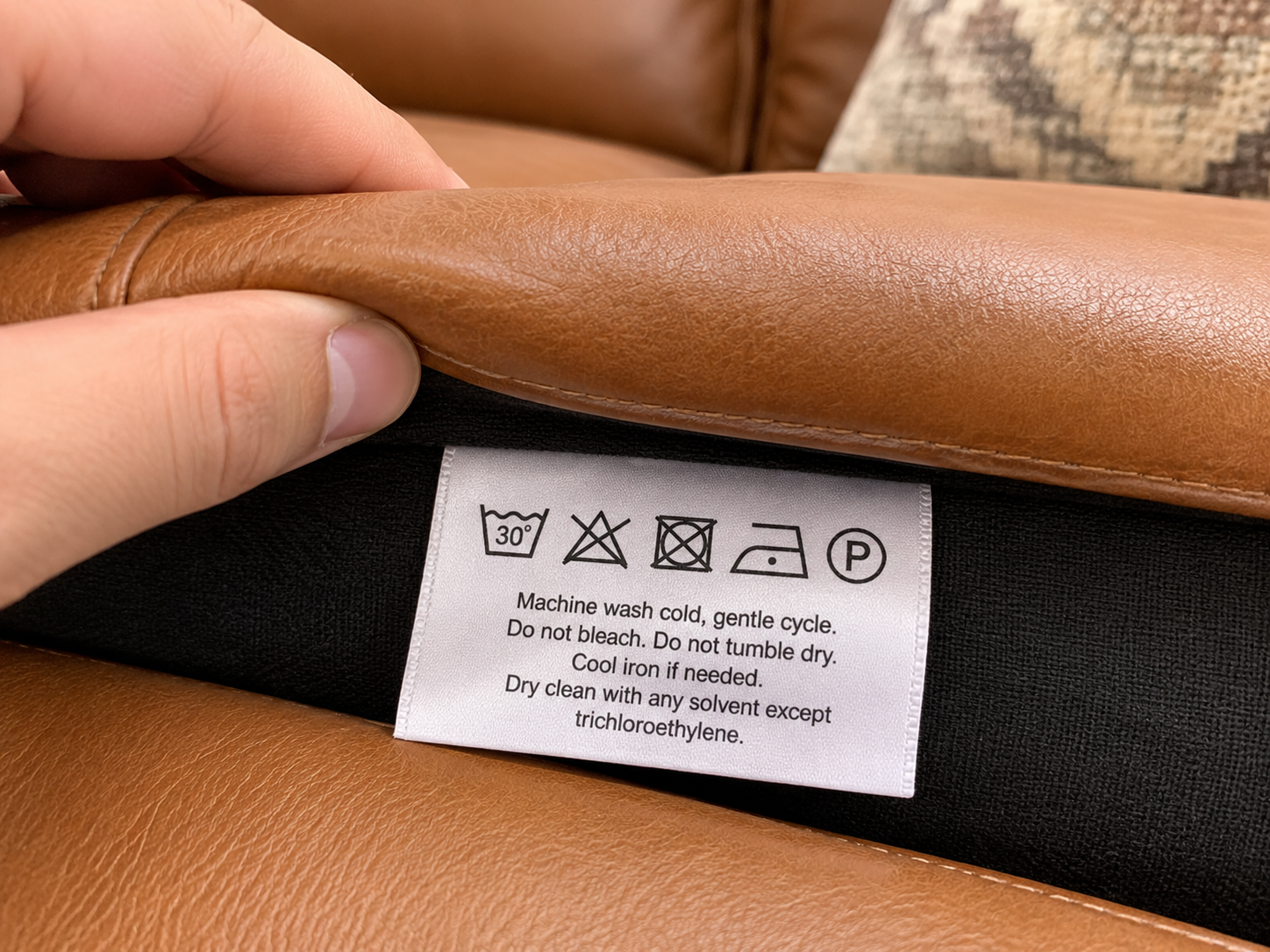
The care tag is usually under a cushion or on the frame.
Start with the tag. Many sofas carry a cleaning code: W means water-based cleaning is fine, S means solvent-based cleaners only, W-S allows either, and X means vacuum only. If the manufacturer left care instructions, follow them over any general advice, including this article.
No tag? Put one or two drops of water on a hidden spot, like the back of the sofa. On finished leather the drop sits on top and beads up. On aniline or semi-aniline leather it soaks in and darkens within a minute or so. Blot it dry right away. A torn edge that shows a fabric backing usually means faux or bonded leather.
Learning how to clean leather furniture properly starts with this step, because every method after it depends on the answer.
2. Gather the Right Supplies and Choose a Cleaner
Short answer: The best leather furniture cleaner is a pH-balanced one made for your leather type, with no alcohol, ammonia, or bleach.
You don't need much:
- 3 or 4 clean, soft white microfiber cloths, so any color transfer is easy to spot
- A vacuum with a soft brush attachment
- Distilled water, because tap water can leave mineral spots
- A leather cleaner and conditioner suited to your leather type
- Cotton swabs for tight spots
When you shop, look for the words furniture leather and pH-balanced on the label, and check that it says it suits your finish. All-purpose sprays, disinfectant wipes, and window cleaners strip the protective coating and dry leather out. Whichever product you pick, test it on a hidden spot first and wait a few minutes before you use it on a seat.
3. Dust and Vacuum First
Short answer: Dry cleaning comes first, because grit left on the surface scratches it when you start wiping.
Take the cushions off and use the soft brush attachment, never a rotating brush roll. Work from the top of the backrest down, then run the tool along seams, tufting, and the gap between the seat and back. Vacuum under the cushions too, since crumbs and coins collect there.
Finish by wiping the whole surface with a dry microfiber cloth, moving with the grain instead of in circles. Plan on about 10 minutes for a standard three-seater.
4. How to Clean a Leather Couch (Finished Leather)
Short answer: Wipe with a lightly dampened cloth in small sections, dry each section right away, and let the couch air dry away from heat.
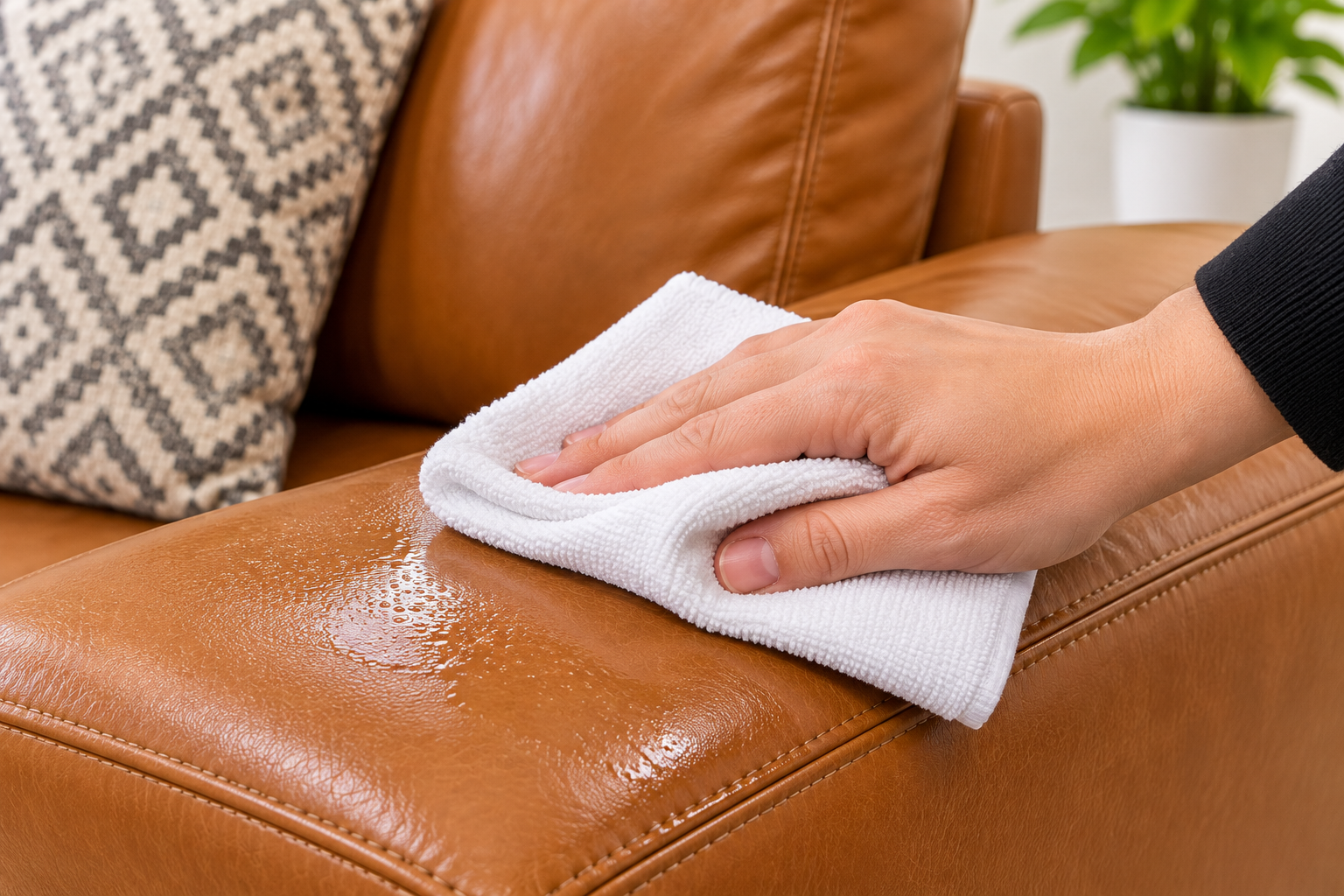
Work in small sections and never let liquid pool on the surface.
This is how to clean a leather couch that has a protective finish, and the same steps work for how to clean leather sofas, armchairs, and sectionals:
- Test your cleaner on a hidden spot and wait a few minutes. If no color comes off on the cloth, you're good to go.
- Dampen a clean cloth with the cleaner or distilled water, then wring it out until it is barely damp.
- Wipe one section at a time using light, even pressure, moving with the grain. Never pour or spray liquid straight onto the leather.
- Follow right away with a dry cloth to remove any residue.
- Let it air dry completely in a ventilated room, out of direct sun and away from heaters. A hair dryer can stiffen the leather.
- Condition it once it is fully dry, which usually takes a few hours.
A three-seater takes about 30 to 45 minutes. On a sectional or recliner, pay extra attention to seams and the folds around the moving parts, where dirt builds up.
5. How to Clean Leather Naturally
Short answer: For finished leather, a barely damp cloth with distilled water is the safest natural method, and a few drops of mild soap handles light grime.
If you want to know how to clean leather naturally, keep it simple. Wring a cloth out in distilled water and wipe the surface, then dry it. For light grime, add just a few drops of mild, fragrance-free soap to a cup of distilled water, wipe, rinse with a plain damp cloth, and dry well. For a musty smell, sprinkle a little baking soda on the surface, leave it for a few hours, and vacuum it up gently.
A natural method is not automatically a safe one, though. These popular home fixes cause trouble:
- Vinegar can dry out and dull the finish.
- Olive or coconut oil can turn rancid, darken the leather, and attract dust.
- Baby wipes, hand sanitizer, and rubbing alcohol contain ingredients that can strip color and coating.
- Melamine sponges act like very fine sandpaper and wear away the finish.
- Saddle soap was made for saddles and can leave a residue on furniture.
6. How to Remove Stains From Leather Furniture
Short answer: Blot fast, never rub, and match the fix to the stain.
Say a glass of red wine tips onto a tan finished sofa. Grab a dry white cloth and press down to soak up as much as you can, moving from the outside in. Then wipe lightly with a damp cloth and a bit of leather cleaner, and dry it. The faster you do this, the better the result. Here is how to remove stains from leather furniture by type, on finished leather:
- Food and drinks: Blot, then wipe with a barely damp cloth. For dried residue, soften it with a damp cloth first instead of scraping.
- Grease, makeup, and lotion: Blot the excess, then sprinkle cornstarch or baking soda on the spot. Leave it for a few hours, then brush it off gently.
- Ink: Dab with a cotton swab and a leather-safe ink remover, working from the edge inward. Set-in ink is a job for a pro.
- Denim dye transfer: Wipe it early with a leather cleaner and repeat gently. Old dye that has set often needs a specialist.
- Pet accidents: Remove solids, blot liquids, and clean with a leather-safe cleaner. If the smell has reached the cushion padding, call a pro.
- Sweat and body oil: Wipe headrests and armrests weekly so the oils never build up.
- Mold or mildew: Move the sofa to a drier spot, vacuum the spores, and call a leather specialist if it spreads or the smell comes back.
On aniline, semi-aniline, suede, or nubuck, blot only and bring in a professional.
7. How to Clean White Leather Furniture
Short answer: White leather needs more frequent wiping because dirt, dye, and sun yellowing show up fast.
If you want to know how to clean white leather furniture, the method is the same as for any finished leather, but the schedule is tighter. Wipe it down every week with a dry cloth and plan a deep clean every three months.
The biggest enemies are dye transfer and sunlight. Dark jeans, newspaper ink, and colored throws can leave marks, so treat any mark the same day. Keep white leather out of direct sun, which can turn it yellow. Use only white cloths, test everything on a hidden spot first, and skip melamine sponges, which can scuff the finish.
8. How to Clean Faux Leather Furniture
Short answer: Faux leather cleans up with mild soap and water, but it should never get leather conditioner, alcohol, or solvents.
Here is how to clean faux leather furniture. Vacuum first, then mix a few drops of mild dish soap into a cup of warm water. Wipe with a well-wrung cloth, go over it again with a plain damp cloth, and dry it. Avoid alcohol, acetone, and nail polish remover, which can eat through the coating.
Faux leather has no pores to absorb conditioner, so oil-based products just sit on top and feel sticky. Heat and sun also speed up damage. The honest truth is that peeling faux or bonded leather can't be repaired well. Patch kits or a slipcover are the realistic options.
9. How to Condition Leather Furniture
Short answer: Condition finished leather every 6 to 12 months, or every 3 to 6 months in sunny, dry, or heavily used spots, after it has been cleaned and dried.
- Leather loses moisture over time, and conditioner replaces the oils that keep it soft. Here is how to condition leather furniture:
- Check that the product suits your leather type, and test a hidden spot.
- Put a small amount on a soft white cloth and work it in with gentle circles.
- Use a thin, even layer. More is not better, since too much leaves a sticky film that attracts dust.
- Let it absorb for the time on the label, then buff off the excess with a clean cloth.
- Keep people and pets off the sofa for a few hours.
Signs your sofa needs it include a dull look, a dry or stiff feel, and fine lines forming in the surface. Don't condition suede, nubuck, or faux leather.
10. Leather Furniture Care: Sun, Heat, and Humidity
Short answer: Keep leather out of direct sun and about 2 feet from heat sources, and aim for indoor humidity of roughly 30 to 50 percent.
Good leather furniture care is mostly about where the sofa sits. Sunlight fades dye and dries the surface, and heat from vents or radiators bakes moisture out. Very dry air cracks leather, while damp rooms invite mildew.
Moving the sofa away from a window is the cheapest fix there is. Sometimes that means rethinking the room, and a few of those practical home improvement changes that make every room work better can make the new spot look intentional. If the sofa has to stay by a window, use curtains or sheer shades during the brightest hours, and swap cushion positions now and then so one seat doesn't fade first.
11. Fixing Scratches, Cracks, and Peeling
Short answer: Light scratches on finished leather often blend away, but deep cracks and peeling need a repair kit or a pro.
For a light scratch, rub gently with a clean fingertip. The warmth and natural oils can help it blend in. Conditioner can soften dry leather, but it won't close a deep crack. Repair kits can fill and recolor moderate damage on finished leather, and large cracked areas are better left to a specialist.
12. A Simple Leather Care Schedule
Short answer: About 10 minutes a week and an hour or so each quarter is enough for most sofas.
The trick is making the routine small enough that you'll actually do it:
- Right away (2 minutes): Blot any spill.
- Weekly (5 to 10 minutes): Dry wipe and vacuum the seams.
- Monthly (15 minutes): Wipe headrests and armrests, and check where the sun hits.
- Every 3 to 6 months (45 minutes): Deep clean.
- Every 6 to 12 months (30 minutes): Condition.
Put the quarterly and twice-a-year jobs on a recurring reminder. One of the home maintenance apps for homeowners will nag you so you don't have to remember. A family with a dog and two kids might shorten those gaps and wipe weekly, while a lightly used sofa in a spare room can stretch them.
13. When to Call a Professional
Short answer: Call a leather specialist for aniline or suede stains, set-in ink or dye, mold, deep cracks, or strong pet odors.
Look for a company that works on leather furniture, not just general upholstery, and tell them your leather type before booking. If your sofa came with a protection plan or warranty, read it first, since some require approved products or professional service.
FAQs
How often should I clean a leather couch?
Wipe it weekly, vacuum the seams, and do a deep clean every 3 to 6 months. Busy homes with kids or pets should clean on the shorter end.
Can I use vinegar to clean leather?
It's best to skip it. Vinegar can dry out and dull the finish. Distilled water or a pH-balanced leather cleaner is safer.
What is the best way to remove stains from leather furniture?
Blot right away, never rub, then use a barely damp cloth or a leather cleaner. Grease responds well to cornstarch, and ink or dye is better handled by a specialist.
Can I use leather conditioner on faux leather?
No. Faux leather doesn't absorb it, so it just leaves a sticky film. Clean it with mild soap and water instead.
How do I get a smell out of a leather sofa?
Sprinkle baking soda, leave it for a few hours, and vacuum it up gently. If the smell is deep in the padding, a professional is the better option.
Is it safe to use soap on leather?
A few drops of mild, fragrance-free soap in distilled water is fine for finished leather. Avoid it on aniline, suede, and nubuck.
Conclusion
Most leather damage comes from guessing. Learn your leather type, test before you treat, and keep the routine small and regular. That is how to clean leather furniture properly without spending a lot or risking the finish.
Start with a vacuum and a dry wipe, add a damp cloth when needed, and condition twice a year. Do that, and a good sofa should stay soft and good-looking for a long time.